Activities to do during COVID-19 School Shutdown

As we enter another week of schools being closed due to the outbreak of the COVID-19 virus, and with children at home, parents are being encourage to continue to support their children’s learning and development. We are here to help! Below is a schedule of activities that parents can do at home with their young ones. Remember, it’s all about making learning fun through play!

March 2020 Activities

SundayMondayTuesdayWednesdayThursdayFridaySaturday
1234567
       
891011121314
       
15161718192021
Read to your child daily: Tell a story or read a bookWhen outside, listen and identify the sounds you hearSing favourite children’s songs to your child Peekaboo (Where is it?)- place toy under a blanket for baby to findStacking- provide child with plastic containers from the kitchen to stack   countMusic & Movement- dance with your childRead to your child daily: Tell a story or read a book
22232425262728
Read to your child daily: Tell a story or read a bookPouring- provide plastic cups for older children to practice pouringName it- before diaper changing name and point to body partsTunnel Play- create a tunnel using sturdy boxes for children to crawlUsing your phone, show family pictures for children to identify personsTextures- have children help with folding clothes and talk about texturesRead to your child daily: Tell a story or read a book
293031
Read to your child daily: Tell a story or read a bookSponge Play- give child a water filled sponge to squeeze. Repeat.Community Walk- talk about what you see, name the colours and count    

For more information on activities to do at home, please visit our COVID-19 Corner at https://ecc.gov.jm/covid-19-corner/

Have you heard of the ECC E-Census?

Picture Source: todayville.com

When we launched this blog in August 2019, one of our aims was to provide to the wider public an opportunity to not only learn more about early childhood development, but to also learn about the work of the ECC as the agency with responsibilities to regulate and coordinate early childhood development services in Jamaica. In today’s blog we will be looking the ECC’s annual E-Census.

What is the ECC E-Census?

The ECC Census is a yearly data collection activity that the ECC undertakes to do an official count of early childhood institutions (ECIs) and staff working in the sector. The purpose of the census is to have up-to-date information on the sector so that we can inform the government for its planning, decision-making and policy.  Census 2018/19 saw the piloting of online data collection which was successful and has led to Census 2019/20 being completely online.

What did we learn last year?

Having completed Census for the academic year 2018/19, here are some fun facts:

88% of ECIs participated in census, which means, out of the 2, 667 ECIs that were recorded as registered with the ECC, 2,334 completed census.

70% of ECI staff completed the census. At the beginning of Census 2018/19, a recorded 16,981 staff members were working in the sector following census data collection, a recorded 11,920 completed the census.

94% of staff were females, while 5.3% were males and 0.2% were not recorded as either male or female.

Early childhood practitioners represented 46% of the total workforce and 97% of them were females.

51% of all staff said that they had worked in the sector for five or more years.

What is the census period this year?

We are now in the process of collecting information from sector for Census 2019-20. Data collection for this period’s census will end in March. We are looking forward to the new information we will learn for this academic year!

Black History Month Early Childhood Pioneer – Part 2

For Black History Month, we continue our celebration of early childhood pioneers. Today, we celebrate Professor Maureen Samms-Vaughan.

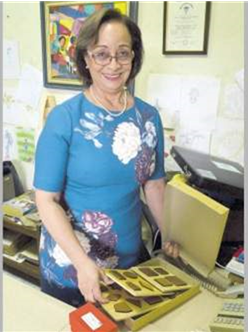
Prof. Maureen Samms-Vaughan

Prof. Samms-Vaughan was born in St. Thomas, August 15, 1957 and grew up in Harbour View. She attended Vaz Preparatory School and later, Excelsior High School. Prof. Samms-Vaughan pursued her tertiary education at the University of the West Indies graduating from the Bachelor of Medicine, Bachelor of Surgery (MB,BS) programme where she completed her Doctor of Medicine in paediatrics in 1988 and was recognised by the Paediatric Association of Jamaica as the most outstanding graduate. She was one of the researchers on Jamaica’s first birth cohort study, the Jamaican Perinatal Morbidity and Mortality Survey (1988). Following her role in that ground-breaking study, Prof. Samms-Vaughan went on to pursue her PhD in Epidemiology at the University of Bristol, United Kingdom.[1]

In 1993, Prof. Samms-Vaughan was appointed Lecturer of Child Health at the University of the West Indies, Consultant Developmental and Behavioural Paediatrician at the University Hospital of the West Indies and Director of Child and Family Clinic for children with developmental and behavioural disorders. Further in 2001, having been promoted to Senior Lecturer and Head of the Department of Child Health at the University of the West Indies, she was invited by the Caribbean Child Development Centre to do research on a group of six-year-olds called the Profiles Project. Her work from the Profiles Projects was published in 2005 through funding from the Planning Institute of Jamaica in a book titled Profiles – The Jamaica Pre-School Child, The Status of Early Childhood Development in Jamaica.[2] In 2006, Prof. Samms-Vaughan was appointed as UWI’s first Professor of Child Health.[3] She has over 50 publications, including three books, several book chapters and peer-reviewed papers, on a range of child development and behaviour related topics. 

Source: The Jamaica Observer, 2018

In 2003, Prof. Samms-Vaughan was appointed Chairwoman of the newly established Early Childhood Commission, the agency was mandated by the Jamaican government to regulate and coordinate early childhood services. Under her leadership, the agency developed its first National Strategic Plan 2008-2013 (NSP) for Early Childhood Development, which was recognised as an international model by the World Bank and the Inter-American Development Bank (IDB) and through which, resulted in funding from the IDB under the Jamaica Early Childhood Development Project for both the NSP 2008-2013 and 2013-2018. Additionally, she oversaw the development of the Child Health and Development Passport and the 12 Standards for the Operations, Management and Administration of Early Childhood Institutions. Since its development and implementation in 2010, the Child Health and Development Passport has seen a 100% rate of usage nationally.

Continuing in her dedication to early childhood, child health and using research to improve the lives of children, Prof. Samms-Vaughan launched the second birth cohort study in Jamaica. The Jamaica Birth Cohort Study, also known as, JA KIDS, began in 2011 and followed every child born between July and September of that year. In total, the study followed approximately 11,000 children and their families from birth through to their fourth year.  The study was designed to collect data that will improve the lives and outcomes of children in Jamaica.[4] She is also active in research for children with developmental disabilities and manages children diagnosed with autism in her clinical practice.

Prof. Samms-Vaughan was recognised for her contribution to national development in the area of child health and early childhood development and was invested with the Order of Distinction, Commander class. She was also recognised by the Early Childhood Commission at their first Professional Development Institute in 2019 for her work in the sector. Professor Samms-Vaughan continues to work in the early childhood sector. She currently lives in Jamaica with her husband and is the proud mother of three children.


[1] http://www.jamaicaobserver.com/all-woman/professor-maureen-samms-vaughan_135889?profile=1259

[2] http://www.jamaicaobserver.com/all-woman/professor-maureen-samms-vaughan_135889?profile=1259

[3] https://www.mona.uwi.edu/fms/jakids/staff/maureen-samms-vaugn

[4] https://www.mona.uwi.edu/fms/jakids/about-the-study/background

Black History Month Early Childhood Pioneer

To celebrate Black History Month, we would like to celebrate an early childhood pioneer.

Rev. Henry Ward

Rev. Henry Ward was truly an early childhood pioneer. Henry Ward was born on the 28th of May, 1879 in the district of Golden Grove, St. Ann. He was a Presbyterian Minister, teacher and headmaster. Having attended Clapham Primary School and St. Georges Primary School, in 1899, Rev. Ward further pursued his studies a Mico Teacher’s College where he was named ‘Honours Man of the Year’ in the graduating class of 1900. Rev. Ward held several leadership roles in education, including, headmaster of Ebenezer Primary School in Manchester and later in 1915, Head of the Teacher Training College Department at the Hope Wadell Institute in Calabar, Nigeria where he was also ordained as a Presbyterian Minister. He returned to Jamaica from Nigeria in 1923 and settled in Islington, St. Mary, where he served as pastor of the Presbyterian Church for forty-four (44) years.[1]

As an early childhood pioneer, Rev. Ward is responsible for the establishment of the first basic school in Jamaica in Islington, St. Mary in 1938. The “play centre” as it was then called, was Rev. Ward’s response to the great demand for child care for working mothers. The play centre, the first established community pre-school, catered to the needs of children under six years old and started the basic school movement in Jamaica. In 1941, Rev. Ward and associates presented to the Jamaican Board of Education recommendations for the establishment of “play centres” as part of the Jamaican education system. These recommendations related to teacher qualifications, facility requirements, and administrative procedures. To facilitate children’s development, the centres were to include organized play/stories, actions songs, and foundations for the development reading, writing and numeracy skills. Later, the term “play centre” was dropped and replaced with “basic school” as parents believed the name suggested less emphasis on education and more on play.[2] As envisioned by Rev. Ward and now evident in our approaches in early childhood development, play is a major element for fostering children’s development.

In 2003, the Islington Basic School was selected for a Labour Day project by the government which allocated JA $2 million for its renovation.[3] The Islington Basic School is still in operation today, catering to needs of children at the early childhood level.

Rev. Ward’s contribution to early childhood in Jamaica is truly commendable and his legacy lives on today. There are now over 1600 basic schools in operation in Jamaica with approximately 80,000 children enrolled. As the agency with responsibility for regulating and supporting early childhood institutions in Jamaica, the Early Childhood Commission, has developed standards to guide ECI operations in areas of teacher qualifications, facility requirements and administrative procedures which are a reflection of Rev. Ward’s early recommendations to the Jamaican Board of Education.

To find out more about the 12 Standards for the Operation, Management and Administration of Early Childhood Institutions, you can visit our website at https://ecc.gov.jm/


[1] https://nlj.gov.jm/biographies/rev-henry-ward-1879-1981/

[2] Jones, J., Brown, A., Brown, J. (2011). Caring and Learning Together: A Case Study of Jamaica

[3] https://jis.gov.jm/islington-basic-school-national-labour-day-project/

Fostering Social and Emotional Development in Children

source: zerotothree.org

Humans are social beings, we come in this world wired for social interaction. We can recognise basic emotions from early in our development. Those first few minutes of life, when a mother takes her baby in her arms, cradles and breastfeeds, are the hallmarks of a social and emotional bond that will be vital to the baby’s development for the rest of her life.

Social and emotional development is a lifelong process. It does not stop when we leave childhood and graduate into adulthood. However, its foundation is rooted in childhood and our early interactions with our caregivers. We know from our own adult life experiences that our ability or inability to express our emotions or to talk about certain situations is dependent on whether or not we were encouraged as children by the adults in our lives to do so. An example is, our society tells us that “boys don’t cry” but it is alright for girls to do so. Crying is the baby’s signal to its carers that something is wrong. Without words, crying becomes the baby’s best method of asking for help, for comfort, for attention, and for protection. As children grow up, crying continues to serve those functions, it is also becomes signal for hurt feelings and sadness. So then, why do we constantly tell boys it is not alright for them to cry? Are we saying that boys do not get their feelings hurt or experience sadness but girls do? When girls cry they get comforted, in most cases, a carer comes to their help. For girls, they learn over time that their emotions are real and it is alright to express them, have others know about them and have them sorted out. However, for boys, they learn that emotions are to be hidden, that they should not signal for help, for protection or for comfort.  And so, this pattern goes on into adulthood.

What tools did we give our boys to foster their social and emotional development that made it alright for us to tell them that “it is not okay to cry?” If as babies, boys were allowed to cry for help, what happened between infancy and early childhood when it was no longer okay to cry? Our children, both boys and girls, need us to help them to grow up socially and emotionally healthy.

As carers, parents, teachers, and guardians of children, we should ensure that along with their academic and physical development, we are fostering their social and emotional development and well-being.

Why is  Social and Emotional Development so Important?

Social Interactions

Children with healthy social and emotional development are good at social interactions. They learn to have good relationships with adults and peers. They learn to take turns, help their friends, play together and cooperate with others.

Emotional Awareness

Children will develop emotional awareness. This is our ability to recognise our own feelings and actions, other people’s feelings and actions, and how our actions affect others.

Self-Regulation

Children will learn self-regulation. This is the ability to express thoughts, feelings and behaviours in socially appropriate ways. Learning to calm down when angry or excited are some ways children learn to regulate themselves.

Here are Some Tips on how can we Foster Children’s Social and Emotion Development

Create predictable and nurturing environments – this could take the form of reading, singing and talking together and providing children with warm and responsive care.

Support children’s social skills – play simple games, like ball games, where children learn to take turns and cooperate.

Be their emotional model – children watch what you do and say, by responding to situations calmly, treating others with respect and kindness, and being joyful and consistent in your interactions with them, you are teaching children what to expect in future relationships.

Help your children to recognise emotions – identifying and talking about emotions when children express them can help children label their emotions appropriately. Talking about your own emotions will help children know that it is okay to talk about their emotions. Always reassure children and comfort them when they turn to you in distress.

Source: https://www2.ed.gov/about/inits/ed/earlylearning/talk-read-sing/feelings-teachers.pdf

Best Practices for Effective Classroom Management

The ECC team would like to wish you and your family a happy and prosperous 2020!

The festive season has come to an end and our little ones are back in school. But being away from school for extended periods and having to return, may cause some level of anxiety in children which could lead to unsettled behaviours, such as crying, becoming clingy or throwing tantrums. Don’t panic! We’ve got some best practice tips for effective classroom management for you! Here are some everyday classroom management practices that can be very effective:

Greet Students at the Door in the Mornings

Start the day on a positive note by standing at the classroom door to greet each child with a warm welcome. Whether it is a smile or a warm hug, this act creates a friendly environment that sets a positive tone for the rest of the day. Consistent morning greetings also allow for a positive connection between teacher and students that creates a feeling of safety and trust within the classroom and by extension the school[i].

Be Organised

While the initial process of getting organised may take time, teachers should prepare to engage students as soon as they arrive at school in the mornings. To be fully prepared, teachers should plan their activities, time to complete activities and materials needed while taking into consideration their students’ individual developmental needs.  The classroom should be prepared to allow for an easy transition into learning centres. Toys should be properly stored in a designated area and easy to be accessed by students.

Use Positive Language and Communication

Ever heard the saying, “There is power in every spoken word”? I believe this to be true, but I also believe it more than words. It includes your tone of voice and body language. When teachers practice using positive phrases such as “good morning”, “How are you?”, “It’s nice to see you”, “I am sorry” and “have a nice day!”- matched by their tone of voice and body language, it reassures children that they are loved, they are respected and appreciated by adults.   The use of positive language and communication in the classroom reinforces positive social skills in children which they can model in their interaction with their peers.

Develop a Relationship with your Students

A good teacher-student relationship is one that is very impactful on students’ academic success[ii]. When children can create a bond with their teachers, they are confident and more open to learning. Developing a positive teacher-student relationship not only impacts children’s learning but it is also effective for classroom management. Normal developing children who feel safe, respected and engaged by adults are less likely to be disruptive in class.

Practices for effective classroom management is important both the wellbeing of both children and their teachers. Share some of your practices for effective classroom management with us in the comments!


[i] Harper, 2018

[ii] Maison, 2017

Harper, A. (2018). New study suggests that greeting students with a positive message yields benefits.         Retrieved from https://www.educationdive.com/news/new-study-suggests-that-greeting-      students-with-a-positive-message-yields-be/532359/

Maison, E. (2017). The importance of positive teacher-student relationship in the classroom. Retrieved         from https://www.theeducator.com/blog/importance-positive-teacher-student-relationships-                classrooms/

What do our children have to say about Christmas?

“It’s the most wonderful time of the year!” Christmas is a time for giving and receiving, spending quality time with family and friends, exchanging gifts and enjoying good home-cooked Christmas meals, Christmas cake and sorrel! We know how much our children love Christmas and we wanted to know some of the things they enjoyed doing during the holiday season. So, we asked some of the children of our ECC staff members a few questions and here are their responses. Enjoy!

What do you enjoy doing with your family at Christmas?

 “I like to spend time with them, have lots of fun and go places with them.”  – Z.

 “I enjoy baking with my family and playing Christmas games.” – T.

 “I enjoy going to the beach and visiting my grandma’s house.” – K.

I likespending time with them watching movies, playing games and opening presents.” – J.

 “I like going to grandma’s house, baking cake, cooking with grandma, eating ice-cream and going to the beach.” – K.

What gift would you really like to get this Christmas?

 “An iPod” – T.

 “Dolls” – T.

 “A new phone” – Z.

 “A puppy” – K.

 “Football boots with spikes at the bottom” – J.

What is your favourite thing about Christmas?

 “Opening my gifts and spending time with my family.” – T.

 “Getting together with my family and having a party.” –  Z.

 “The presents!” – T.

 “Spending time with my family.” – K.

 “My favourite thing about Christmas is my family.” – J.

 “I get to watch a lot of Christmas movies, listen to Christmas carols and get presents.” – K.

What is your favourite Christmas Carol?

 “Jingle Bells” – Z. & T.

 “Santa Claus is Coming to Town.” – K.

 “Feliz Navidad”- J.

 “The Virgin Mary had a Baby Boy” – K.

Why do we celebrate Christmas?

 “We celebrate Christmas so that I can get lots of presents!” – T.

 “To show our Christmas spirit.” – Z.

 “We celebrate because Jesus was born on Christmas day.” – T. & K.

 “It is because we are celebrating the birth of Jesus Christ and we get together with family and friends.” – K.

 “We celebrate Christmas because it is Jesus’s birthday.” – J.

What is the name of your favourite Christmas movie?

 “Santa Claus” – T.

 “The Grinch” – Z. & T.

 “The Knight before Christmas” – K. & K.

 “Shrek the Halls” – J.

What is your favourite thing to eat at Christmas?

 “KFC popcorn chicken and cake and cookies!” – T.

 “Christmas pudding” – Z.

 “I love to eat curry goat.” – K.

“I love Christmas cookies.” – J.

“Chicken and ham are my favourite.” – K.

Who was born on Christmas Day?

 “Santa Claus” – T.

 “My uncle”- Z.

“Jesus!” – K., J. & T.

What do your children have to say about Christmas? Tell us below in the comments section!

We’ve got the App for Christmas!

Christmas ah come, mi waan mi lama! Yes, everyone, Christmas is just around the corner and if you have a smartphone or tablet on your Christmas list, we have just the App for you!

We wrote about the 1st 1000 Days App in an earlier post, as an introduction of what is to come. Well, the App was released today and is available for download in the Google Play Store and coming soon for IPhone users. We are more than excited and you will be too when you download the App!

On 19th November, the ECC launched the 1st 1000 Days App at the Terra Nova Hotel in New Kingston, the launch was attended by the Minister of Education, Youth and Information, The Right Honourable Karl Samuda, the Japanese Ambassador to Jamaica, His Excellency Hiromasa Yamazaki, other dignitaries form the MOEYI, UNICEF, parenting partners of the ECC, NGOs and the press.

This App is the first of its kind in Jamaica and the Caribbean. It is a new frontier to parent support that has not yet been explored in this hemisphere. We are leveraging technology to reach parents where they are and to provide them with information that will enhance their parenting skills, improve their relationship with their children, and increase their knowledge of child development, that will ultimately result in the optimal development of our children.

What are some of the features of the App?

Track Your Child’s Development

The App will allow parents to track their children’s development with our built-in milestone tracker that follows the child as he or she develops.

Speak to Other Parents

A comforting factor for a lot of parents is to know that they are not alone, that there are parents who have experienced similar joys and pitfalls of parenting that you are now facing. To have your experiences acknowledged and to get advice from someone who has already been there, is very valuable. That’s why we felt it was necessary to provide parents with a platform on the App to share their experiences, to talk amongst themselves, and to give advice. This is the Forum which is a major feature of the App.

Learn New Things about Child Development

Parents will be able to get valuable information on all aspects of child development through articles and videos, which cover topics such as breastfeeding tips, behaviour management tips, information on the early days of pregnancy and how to care for your infants and toddlers, and more. There is a wealth of information that parents will have access to, that they can access in the comfort of their own homes and in their free time.

Find an ECI, BBC or Parent Place near You

The entire directory of early childhood institutions (ECIs) will be available on the App. Parents will be able to search for an ECI near them and to check the certification status of their children’s ECI. You will also be able to find a Brain Builder Centre (BBC) or a Parent Place near you. Are you a new mother is going back to work and is looking for the nearest day-care centre, nursery or Brain Builder to you? Have no fear, you’ll be able to get this information from the 1st 1000 Days App.

There is so much more that this App will be able to offer parents and caregivers of young children, there isn’t enough space to tell you right here. You will have to download the App to find out more!

Let us know you get on with the 1st 1000 Days App! 

Be the influence: Show Love, Show Empathy, Show Respect

As we continue to celebrate Parent’s Month, we will take a closer look at the theme “Be the Influence-Show love, show empathy, show respect”- These are some of the ways that parents can make a positive impact on their children’s lives and help them to become emotionally stable adults.

Show Love

Image result for pictures showing love to children

Do you remember the first time you laid eyes on your child? Just remembering that moment with your little bundle of joy is delightful, such an amazing feeling isn’t it? This basically sums up the way most parents feel about their children. Although we love our children endlessly, life has a way of getting so busy that we forget to show our children how much we love them. Showing love to your children is essential to their development because it builds their self-esteem, improve their academic performance, improve your communication with them and reduces behavioural problems.  Given the benefits of showing love to children, here are some tips on how to show love to your children everyday:

  • Hug and kiss children daily and remember to say “I love you”
  • Praise your children for something that they’ve worked hard for
  • Set a special time for family to get together and have fun
  • Schedule regular play-time with children.

Show Empathy

Image result for parents showing empathy to children

Children are “little people” that have their own thoughts and feelings, which sometimes are overlooked by adults. As parents, it is our duty to reassure our children that they are not alone and we are here to listen to them.We do this by “putting ourselves in their shoes”. We make their feelings, our feelings and their fears, our fears. When we are able to do that, it shows our children that we completely understand them and they are not alone.This also helps to build a trusting and secure parent-child relationship and teaches our children to have empathy for others. Some of the ways we can show empathy to children include:

  • Allow your children to express their feelings without fear of being punished or ridiculed
  • Understanding your child feelings and let them know those feelings are real, do not dismiss them
  • Repeat what they have said to you the way they said it, this shows you are listening.

Show Respect

respect children

Source: www.http://ageofmontessori.org/

“Respect works both ways”?, I am sure you have heard this saying before. The lesson from this has stayed with me throughout my life. Many adults do not recognize that they have a responsibility to be respectful to children. As parents it is necessary that we show respect to our children so that they will learn to be respectful to themselves and others. But you may ask, how can I be respectful to my children? Some ways parents can show respect to their children are:

  • Allow your children to speak for themselves
  • Allow your children to speak without interruptions
  • Appreciate your children’s individuality
  • Listen to your children’s views.

After reading this article you might have thought of other ways that you can be the influence in your children’s life.                                                                                                                                            Please share your thoughts in the comment section, and follow us for notification on our upcoming Christmas posts. 

References

LaRowe, M. (n.d). 4 Tangible Ways to show your child you love him. Retrieved from https://www.momtastic.com/parenting/106826-4-tangible-ways-to-show-your-child-you-love-him/

Morin, A. (2014). The importance of showing love empathy to kids who learn and think differently. Retrieved from https://www.understood.org/en/learning-thinking-differences/understanding-childs-challenges/talking-with-your-child/the-importance-of-showing-empathy-to-kids-with-learning-and

Taylor, J. (2010). Parenting: Respect Starts at home. Retrieved from https://www.psychologytoday.com/intl/blog/the-power-prime/201001/parenting-respect-starts-home

Are You an Involved Parent?

November is Parents Month! Yay!

In our Recognising Parents as Everyday-Heroes post, we looked at some of the ways parents are valuable to our lives. We want to continue that theme by looking at parental involvement and what it means.

I am sure you’ve heard the term parental involvement before: from the news, people on social media and the experts. Sometimes it’s framed as a warning for any parent who might be thinking of slacking off, “if his parents were more involved, he would have come out to something good” or for parents who are perceived as not doing enough,  “parents should be more involved in their children’s learning”. But what is parental involvement? Do you think you are involved enough in your child’s development?

What does Parental Involvement Even Mean?

There is not one definition for parental involvement and research shows that the meaning of the term varies as parental involvement can take many forms. Just ask mommies what their idea of parental involvement is and then ask daddies, and then, compare those replies! The general view, however, is that parental involvement can be seen as investments parents make in their children’s learning and development. It also involves the participation of parents in activities and them taking advantages of opportunities that are going to further their children’s development.[1] Also, parental involvement can be seen as a partnership between families and schools. The school-family partnership[2] approach is one that looks at how well the schools and families can work together to achieve the best outcomes for children. The school-family partnership works in five different ways:

Through Parenting

Parents are helped to establish home environments that support their children’s learning and development and schools are helped to understand the families and their needs.

Through Communication

Conducting effective forms of two-way communication about children’s progress benefits children.

Think back to your meetings with principals and teachers. Were those helpful for you and your children?

Through Volunteering

Parents are recruited to organise help for the classrooms, school functions and students’ activities.

Can someone say, Cake Sales?!

Learning at Home

By providing families with information, ideas and opportunities on how to help their children at home with homework and curriculum related-activities, schools can ensure that children’s learning continues after they have left school.

We all know (or is one of) those parents who stay up all night helping with those school projects! We see you and we salute you!

Decision Making

By including parents in school governance and decisions being made that will affect their children’s learning and development, families and schools work together to ensure everyone is on the same page, decisions are agreed on, and that expectations and responsibilities are clear.

PTA meeting, anyone?!

Does your involvement in your children’s learning and development fall into any of these five family-parent partnership categories? Tell us about it in the comment section.


[1] Fagbeminiyi, F.F. (2011). The role of parents in early childhood education: A case study of Ikeja, Lagos State, Nigeria. Global Journal of Human and Social Science. Vol 11, Issue 2, Version 1, Global Journals  Inc.

[2] Sanders, M.G. and Eptein, J.L. (2005). School-family-community partnerships and educational change: International perspectives. Chapter in A. Hargreaves, A. Leiberman, M. Fullan and D. Hopkins (eds.), International Handbook of Educational Change. Hingham, MA: Luwer Academic Publishers