Black History Month Early Childhood Pioneer – Part 2
For Black History Month, we continue our celebration of early childhood pioneers. Today, we celebrate Professor Maureen Samms-Vaughan.

Prof. Samms-Vaughan was born in St. Thomas, August 15, 1957 and grew up in Harbour View. She attended Vaz Preparatory School and later, Excelsior High School. Prof. Samms-Vaughan pursued her tertiary education at the University of the West Indies graduating from the Bachelor of Medicine, Bachelor of Surgery (MB,BS) programme where she completed her Doctor of Medicine in paediatrics in 1988 and was recognised by the Paediatric Association of Jamaica as the most outstanding graduate. She was one of the researchers on Jamaica’s first birth cohort study, the Jamaican Perinatal Morbidity and Mortality Survey (1988). Following her role in that ground-breaking study, Prof. Samms-Vaughan went on to pursue her PhD in Epidemiology at the University of Bristol, United Kingdom.[1]
In 1993, Prof. Samms-Vaughan was appointed Lecturer of Child Health at the University of the West Indies, Consultant Developmental and Behavioural Paediatrician at the University Hospital of the West Indies and Director of Child and Family Clinic for children with developmental and behavioural disorders. Further in 2001, having been promoted to Senior Lecturer and Head of the Department of Child Health at the University of the West Indies, she was invited by the Caribbean Child Development Centre to do research on a group of six-year-olds called the Profiles Project. Her work from the Profiles Projects was published in 2005 through funding from the Planning Institute of Jamaica in a book titled Profiles – The Jamaica Pre-School Child, The Status of Early Childhood Development in Jamaica.[2] In 2006, Prof. Samms-Vaughan was appointed as UWI’s first Professor of Child Health.[3] She has over 50 publications, including three books, several book chapters and peer-reviewed papers, on a range of child development and behaviour related topics.
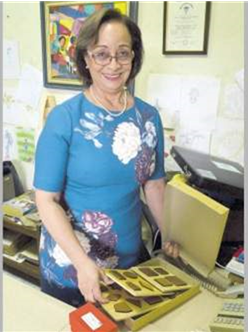
In 2003, Prof. Samms-Vaughan was appointed Chairwoman of the newly established Early Childhood Commission, the agency was mandated by the Jamaican government to regulate and coordinate early childhood services. Under her leadership, the agency developed its first National Strategic Plan 2008-2013 (NSP) for Early Childhood Development, which was recognised as an international model by the World Bank and the Inter-American Development Bank (IDB) and through which, resulted in funding from the IDB under the Jamaica Early Childhood Development Project for both the NSP 2008-2013 and 2013-2018. Additionally, she oversaw the development of the Child Health and Development Passport and the 12 Standards for the Operations, Management and Administration of Early Childhood Institutions. Since its development and implementation in 2010, the Child Health and Development Passport has seen a 100% rate of usage nationally.
Continuing in her dedication to early childhood, child health and using research to improve the lives of children, Prof. Samms-Vaughan launched the second birth cohort study in Jamaica. The Jamaica Birth Cohort Study, also known as, JA KIDS, began in 2011 and followed every child born between July and September of that year. In total, the study followed approximately 11,000 children and their families from birth through to their fourth year. The study was designed to collect data that will improve the lives and outcomes of children in Jamaica.[4] She is also active in research for children with developmental disabilities and manages children diagnosed with autism in her clinical practice.
Prof. Samms-Vaughan was recognised for her contribution to national development in the area of child health and early childhood development and was invested with the Order of Distinction, Commander class. She was also recognised by the Early Childhood Commission at their first Professional Development Institute in 2019 for her work in the sector. Professor Samms-Vaughan continues to work in the early childhood sector. She currently lives in Jamaica with her husband and is the proud mother of three children.
[1] http://www.jamaicaobserver.com/all-woman/professor-maureen-samms-vaughan_135889?profile=1259
[2] http://www.jamaicaobserver.com/all-woman/professor-maureen-samms-vaughan_135889?profile=1259
[3] https://www.mona.uwi.edu/fms/jakids/staff/maureen-samms-vaugn
[4] https://www.mona.uwi.edu/fms/jakids/about-the-study/background
 EARLY CHILDHOOD COMMISSION